Services · Adolescents
Adolescent psychology in Barcelona
Adolescence can bring changes in relationships, independence and the way emotions are experienced. When distress appears or difficulties interfere with daily life, we offer a space to understand the situation and agree how to work on it.
- Via Augusta, 42 · close to Gràcia
- In person, and online when appropriate
- Spanish, Catalan and English depending on the professional
(Reasons for consulting)
When to consult
We see adolescents for anxiety, mood, self-esteem, relationships, family life, adapting to school and problematic screen use.
Not every argument or change typical of adolescence points to a disorder. We consider the intensity of the distress, how it develops and the context.
If there are eating problems, self-harm or a risk situation, the appropriate level of care needs to be assessed. We can advise and coordinate, but outpatient care does not replace urgent or specialised services that may be needed.
(Confidentiality)
A space of their own and clear family involvement
At the start we explain to the adolescent and their family how appointments will be organised, what confidentiality means and its limits.
The involvement of parents or carers is adapted to age, needs and the applicable requirements. Sharing goals and guidance does not mean passing on everything said in sessions.
(Getting started)
How we begin
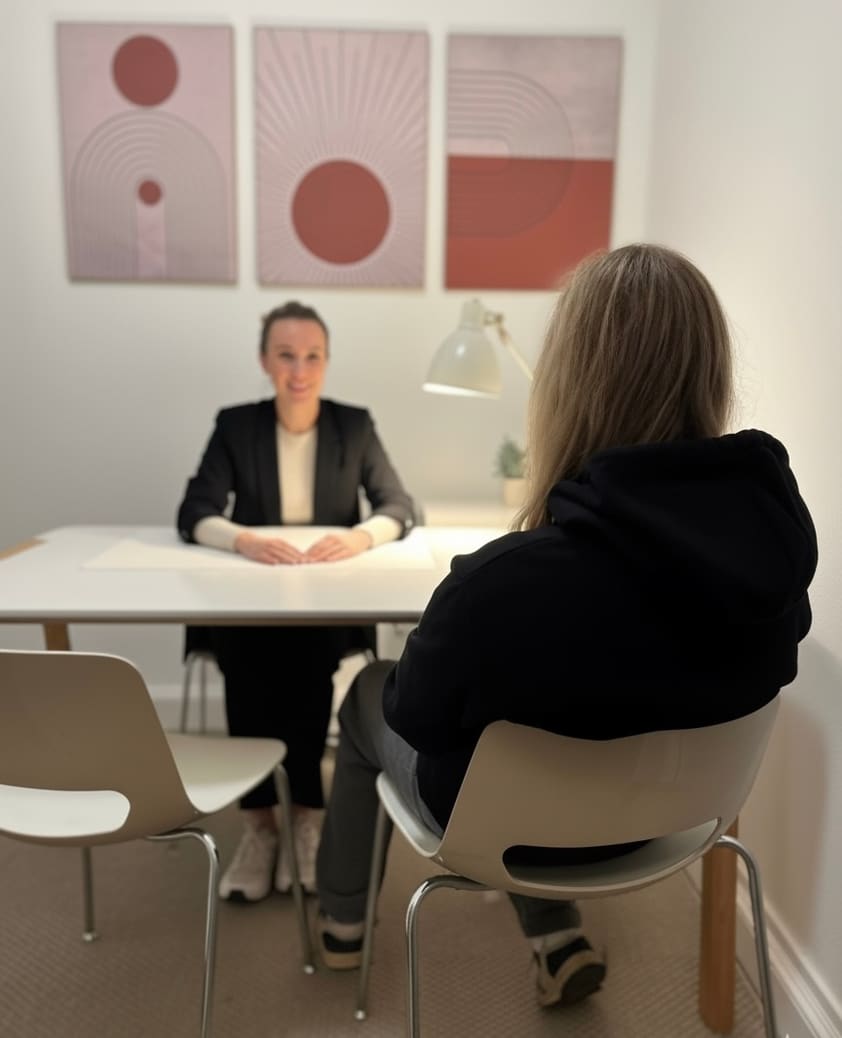
We understand the reason for consulting from the relevant perspectives and agree goals for the work.
If specific questions arise about attention, learning or development, we consider whether a neuropsychological assessment is advisable. Frequency and duration are reviewed during the process.
The format is agreed according to the young person’s situation and the conditions needed for the work. Some assessments require in-person appointments.
(When they refuse)
If they do not want to come
You can ask for guidance to explore how to suggest help, what worries them and which alternatives are appropriate.
Refusing does not, on its own, tell us what they are feeling. We avoid presenting the appointment as a punishment and try to help them understand what it can be useful for.
(Team)
Professionals who work with adolescents
-
 Alexia Olaria Pariente Psicóloga General Sanitaria · Psychotherapist Psychotherapy with children, adolescents and adults COPC 23824
 -
 Elena Aragonés Anglada Psicóloga General Sanitaria Adolescents, adults and family support COPC 25740
 -
 Albert Sanz Iglesias Psicólogo General Sanitario · Psychotherapist Children, adolescents and adults; group work COPC 19941
 -
 Daniel Álvarez Jiménez Psicólogo General Sanitario Adolescents and adults; brief psychotherapy COPC 31819
Frequently asked questions
Do you only see young people aged 12 to 18?
Guidance is adapted to the stage of development and the reason for consulting. We can discuss with you which professional is appropriate during the transition to adulthood.
Is the family informed?
From the start we agree what involvement is needed and how information is shared, respecting legal requirements and the limits of confidentiality.
What do parents hear about what is said in sessions?
Sharing goals and guidance does not mean passing on everything said in sessions. At the start we explain to the young person and the family how confidentiality works and where its limits are, for example if there is a risk to their safety.
How can we tell a normal teenage change from a problem?
Not every argument or change in adolescence points to a disorder. We look at how intense the distress is, how it evolves and the context. If you are worried, you can get in touch even if you are not sure.
What if they do not want to come?
You can ask for guidance on how to offer help, what is worrying them and which alternatives are suitable. Refusing does not, on its own, tell us what they are feeling; we avoid presenting the appointment as a punishment.
What if there is self-harm or a risk situation?
The right level of care needs to be assessed; outpatient care does not replace urgent or specialist services. If there is an immediate risk, call 112. In Spain, 024 supports people with suicidal thoughts or at risk of suicidal behaviour, and their families.
Is a neuropsychological assessment needed?
Only if specific questions arise about attention, learning or development. In that case we discuss with you whether it is advisable, and it is arranged separately.
Can sessions be online?
We see people in person in Barcelona, and online when age, the reason for consulting and the conditions of the work allow it. We agree this once we understand the situation.
(Contact)
Ask about support for adolescents
What to tell us
- The reason for consulting, in a few words
- Your preferred language
- Your availability
You do not need to send reports or clinical details through these channels to ask for an appointment. Before booking, we explain the appointment format, fees and relevant conditions.
- Message us on WhatsApp +34 638 676 824
- Call +34 638 676 824
- Send an email info@alfabetapsicologia.com
- Via Augusta, 42, mezzanine floor, door 3 · 08006 Barcelona · Where we are
AlfaBeta provides outpatient care. If a situation needs more intensive care, we can advise on appropriate services. The practice does not provide an emergency service.